About All Tours Hot Springs ToursEmbalse el Yeso ToursFrom Santiago ToursPrivate ToursWinter Tours Directions Hours & Fees
Find Tours 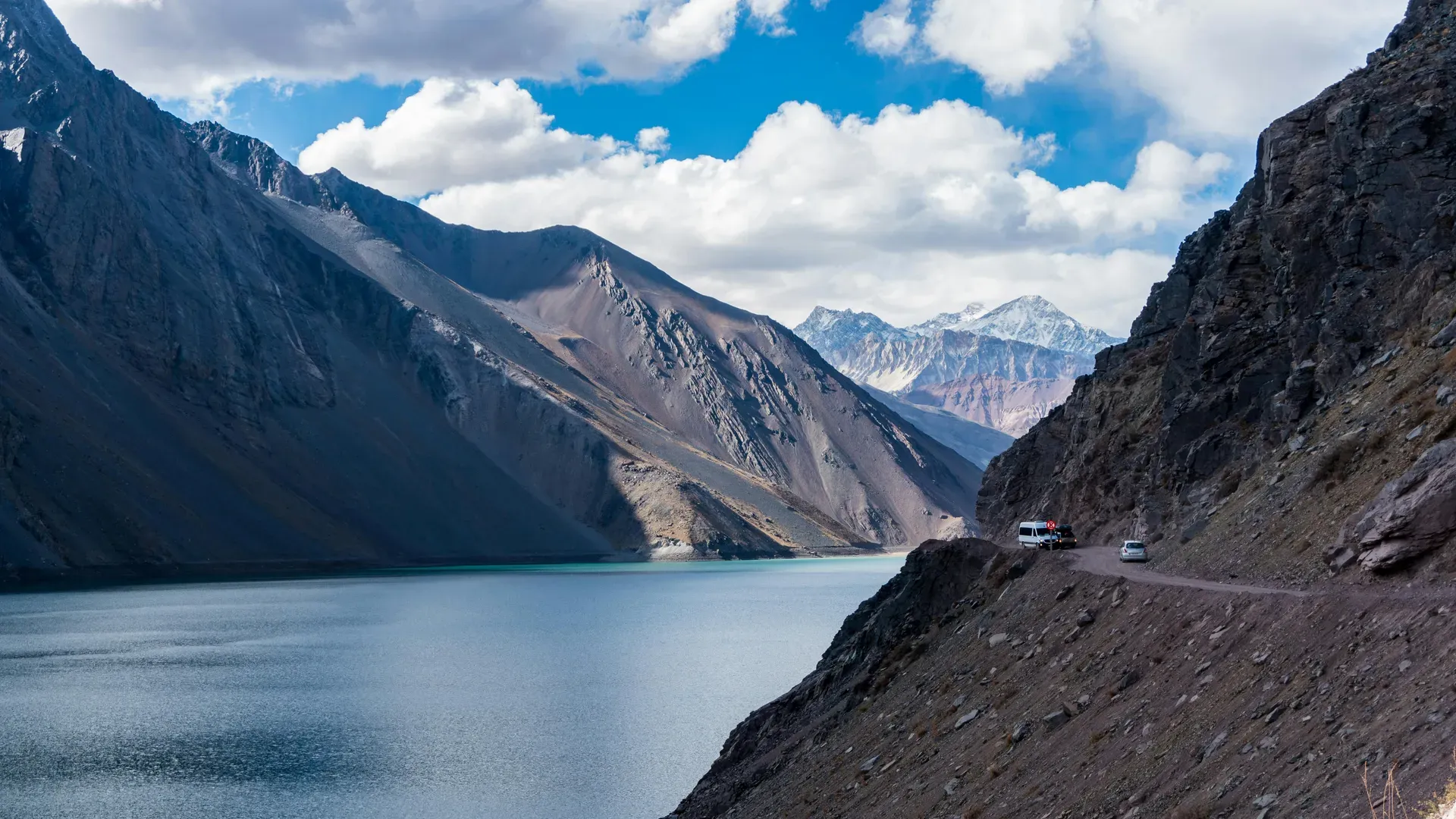
Covering 5,000 square kilometers, Cajon del Maipo is a dramatic Andean canyon featuring over 600 glaciers and three active stratovolcanoes. Visitors can soak in nine natural thermal pools at Valle de Colina or photograph the turquoise waters of Embalse El Yeso sitting at an altitude of 2,500 meters.
Find Guided ToursCajón del Maipo is a sprawling Andean canyon and valley located 55 kilometers southeast of Santiago. Covering approximately 5,000 square kilometers, it encompasses the upper basin of the Maipo River, which flows through the rugged mountain range for over 70 kilometers. Elevation within the canyon varies drastically. The valley floor sits at roughly 600 meters, while the surrounding peaks rise sharply, culminating at the 6,570-meter summit of Marmolejo, the southernmost mountain in the world to exceed 6,000 meters.
The dramatic terrain is the direct result of the subduction of the Nazca and South American tectonic plates, combined with millennia of water carving through the rock. Recognizing its rich geodiversity, officials declared the canyon the Geological Capital of Chile in 2018. The region contains three active stratovolcanoes, including the 5,856-meter San José Volcano, and holds more than 600 glaciers.
Human activity in the canyon dates back centuries. By royal decree, the village of San José de Maipo was founded on July 16, 1792, to support local silver, copper, and gypsum mining operations. The area quickly drew scientific interest, prompting Charles Darwin to conduct the region's first recorded geological study in 1835. Today, the municipality is home to 18,644 inhabitants and retains much of its historical significance.
During the 20th century, Cajón del Maipo transitioned into a vital infrastructure hub for central Chile. Engineers constructed the country's first hydroelectric plant in Los Maitenes and completed the Embalse El Yeso reservoir in 1964. Holding 253,000,000 cubic meters of water, this massive turquoise reservoir now serves as the primary source of drinking water for the city of Santiago. Beyond utility, the canyon acts as a critical center for adventure tourism and ecotourism in the metropolitan region.
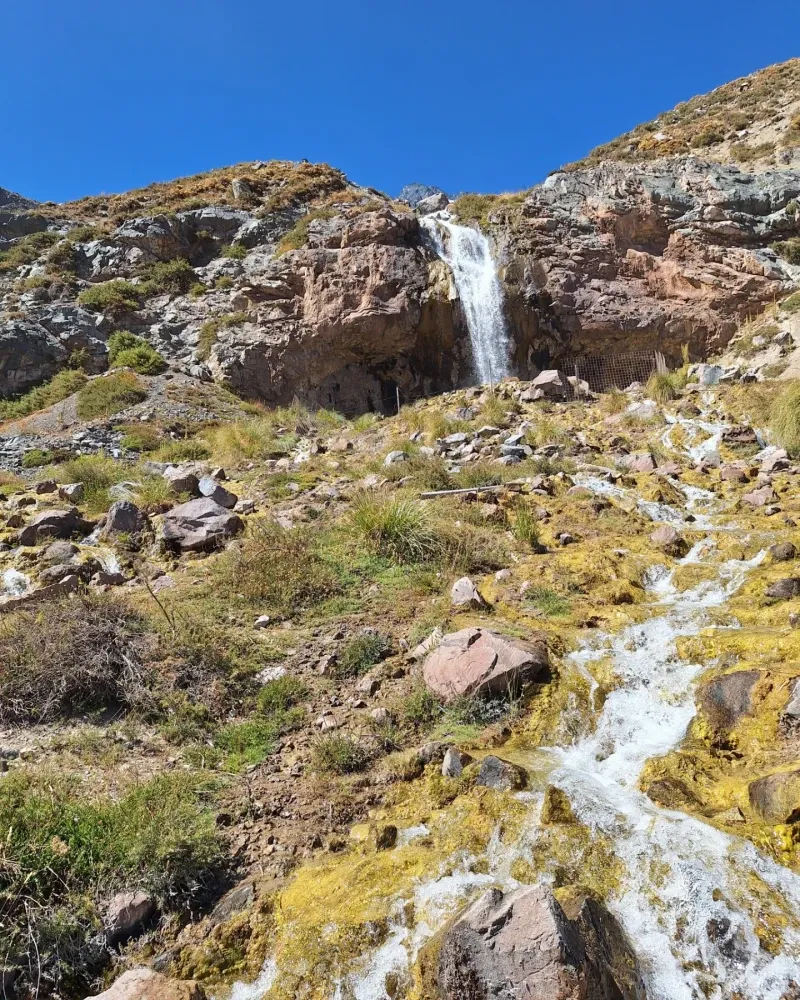
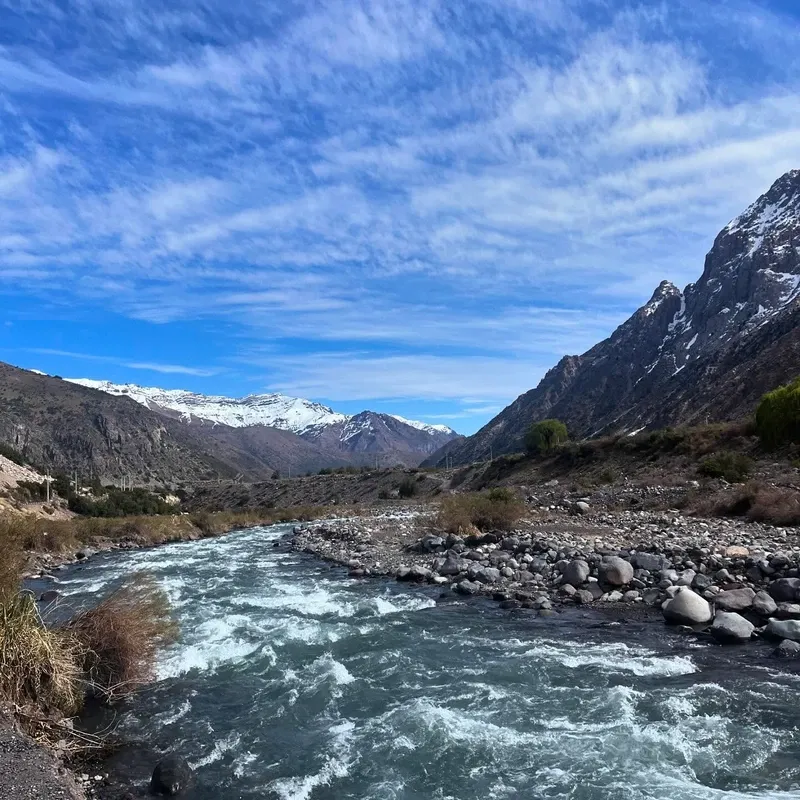
Discover the full history and cultural significance on our About page.
Nine natural thermal pools cascade down the mountainside at Termas Valle de Colina. Water temperatures range from 25°C to 55°C. Visitors can relax in the mineral-rich water while taking in direct views of the 5,856-meter San José Volcano. Access requires ascending to altitudes of 2,500 meters.
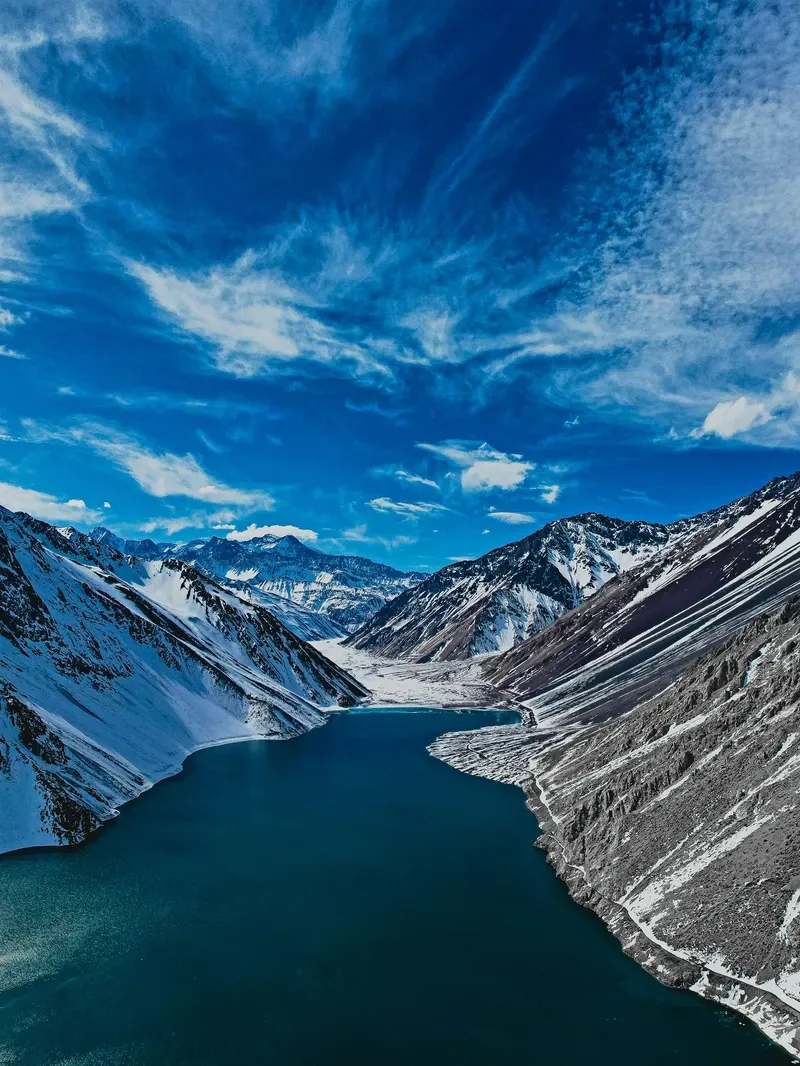
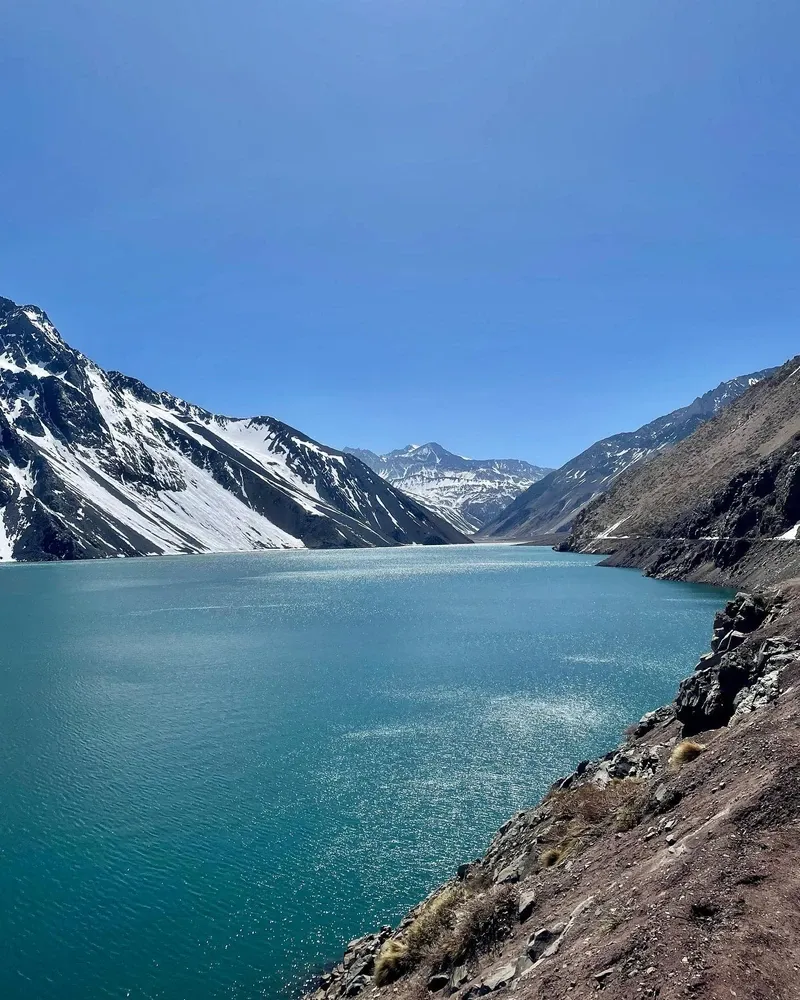
The massive Embalse El Yeso sits at a 2,500-meter altitude, holding 253 million cubic meters of water. This turquoise basin provides the primary drinking water for Santiago. Snow-capped Andean peaks surround the shoreline, creating an ideal setting for photography and high-altitude picnics.
El Morado Natural Monument features an 8-kilometer round-trip trail leading to the San Francisco Glacier and Morales Lagoon. Hikers must start their ascent before the strict 12:30 PM cutoff enforced by CONAF. The rocky terrain requires sturdy boots and preparation for sudden temperature drops.
The Maipo River carves a narrow valley through the rugged mountain range, generating high-adrenaline Class III and IV rapids. The water volume peaks during the summer melt season between October and March. This 70-kilometer waterway offers intense white-water conditions through the central canyon.
Hand-picked tours with free cancellation and verified reviews
 Free Cancellation
  Free Cancellation 10h
  Free Cancellation 12h
  Free Cancellation 10h
  Free Cancellation 10h
  Free Cancellation
  Free Cancellation 10h
  Free Cancellation 10h
 The optimal window to visit Cajón del Maipo is from October to March, when stable weather allows full access to high-altitude trails and thermal springs. The period between June and September brings heavy snowfall and unpredictable storms that frequently close mountain roads.
Early spring experiences unpredictable storms and residual road closures. By October, conditions stabilize, opening up high-altitude trails and making it an excellent time for trekking before peak summer traffic.
Stable weather and clear skies dominate, providing ideal conditions for hiking to the 2,500-meter reservoir. The summer melt season also creates optimal Class III and IV rapids for river rafting.
March maintains the stable weather of summer, allowing continued access to thermal pools and hiking routes. Temperatures drop sharply by late autumn, requiring layered clothing for sudden 15-degree shifts.
Heavy snowfall and unpredictable mountain storms cause frequent closures on Route G-25. While it provides the most snow, access to major attractions is heavily restricted and whiteout conditions are common.
Operating hours depend on the specific site within the canyon. Parque Embalse El Yeso opens from 08:00 to 18:00, with the last entry permitted at 16:00. Monumento Natural El Morado operates from 08:30 to 17:30. Visitors heading to El Morado must arrive early, as park authorities strictly prohibit starting the hike after 12:30. High-altitude areas may close without notice due to heavy snowfall or whiteout conditions.
| Category | Price |
|---|---|
| Parque Embalse El Yeso (General Admission) | 3,450 CLP |
| Termas Valle de Colina | ~10,000 CLP |
Advance reservations are required for Parque Embalse El Yeso and must be booked through the Asociación Parque Cordillera website or Punto Ticket. Carry plenty of Chilean Pesos (CLP) in cash, as card machines frequently fail due to poor cellular signal in remote sections of the canyon.
For complete schedules and ticket prices, visit our Hours & Fees page.
Cajón del Maipo is located 55 kilometers southeast of Santiago, making it accessible by road via Route G-25. Visitors can choose between driving, taking public transit from the Santiago Metro, or booking a guided tour.
📍 Not specified in research (5,000 km² region in the southeastern Santiago Metropolitan Region)
Drivers depart from the Santiago city center and travel southeast along Route G-25, known locally as Camino al Volcán. This primary paved route covers roughly 60 kilometers. A standard car handles the main roads easily during the summer months. Winter driving or reaching remote trailheads requires a 4x4 vehicle. The final stretch to Embalse El Yeso on Route G-455 transitions into a narrow, winding gravel road.
The MB-72 bus service departs directly from the Metro Las Mercedes station on Line 4. These buses run every 30 minutes and travel 45 kilometers into the canyon. The standard route terminates in the main town of San José de Maipo. Visitors needing to reach further destinations can look for the MB-72A variant. This specific line continues onward to the mountain hamlet of Baños Morales.
Shared taxis provide a faster public transit alternative from the Metro Las Mercedes station. Vehicles cover the 45-kilometer distance to the canyon without the frequent stops of a standard bus. Drivers wait until the car is completely full before departing. During peak hours, a new colectivo typically leaves every 10 to 15 minutes. This option works well for reaching the primary towns quickly.
Operators provide direct hotel pickups in Santiago for full-day excursions into the canyon. These packages eliminate the need to navigate public transit or drive on challenging gravel roads. Most itineraries include round-trip transport, a local guide, and a picnic. Final prices depend heavily on the total group size. Premium options frequently add stops at the Termas Valle de Colina hot springs.
For detailed transport options and routes, visit our Directions page.
ATMs are exclusively located in the main town of San José de Maipo. Businesses further into the canyon operate on a cash-only basis due to unreliable card networks. Withdraw plenty of Chilean Pesos before driving past San Gabriel, where cellular service entirely disappears.
The CONAF authorities enforce strict entry rules for the El Morado Natural Monument. You must arrive at the entrance before 12:30 PM to begin the 8-kilometer round-trip trek to the San Francisco Glacier. Rangers will deny access to anyone starting the hike after this cutoff time. Leave pets at home, as dogs are prohibited in this protected area.
Visitors quickly reach elevations between 2,500 and 3,000 meters at Embalse El Yeso and the Termas Valle de Colina hot springs. This rapid ascent can cause mild altitude sickness, locally known as puna. Prevent symptoms by staying hydrated throughout the day. Avoid consuming heavy meals before driving up the canyon.
The canyon's single-lane roads experience severe traffic congestion on weekends with Santiago locals. Plan your visit for a weekday if possible. The final stretch to the reservoir on route G-455 is a narrow, winding gravel road prone to rockfalls. A standard car works in summer, but winter access requires a 4x4 vehicle.
Mountain weather fluctuates rapidly across the canyon's 5,000 square kilometer area. Dress in distinct base, thermal, and waterproof layers. Temperatures frequently drop by 15°C within a single hour as the sun sets behind the peaks. High-SPF sunscreen and sunglasses are also critical to block the intense high-altitude Andean sun.
Access to Parque Embalse El Yeso requires an advance reservation made through the Asociación Parque Cordillera website or Punto Ticket. The general admission fee is 3,450 CLP. If you plan on tackling high-mountain routes, local laws require registering your itinerary with the Carabineros police station in San Gabriel for safety.
This boutique ski resort caters to families during the winter months. When the snow melts, the area transitions into a hub for trekking and mountain biking.
This small mountain hamlet functions as the primary gateway to the El Morado Natural Monument. Visitors often stop here to soak in the local mineral-rich thermal mud baths.
A decommissioned railway tunnel provides a brief stop for photography and short walks. The site features various shrines and is tied to several regional legends.
Read what travelers share about their experience visiting Cajon del Maipo — from practical tips to personal highlights.


You can take the MB-72 public bus or a shared taxi from the Metro Las Mercedes station, which takes 60 to 90 minutes and costs between 1,500 and 2,500 CLP. However, public transport only reaches the main towns like San José de Maipo. To visit further attractions like the Embalse El Yeso reservoir, you will need to book a guided tour or rent a vehicle.
The best months to visit are October through March. During this period, the weather is stable, hiking trails are clear, and high-altitude attractions like the hot springs remain accessible. Avoid visiting between June and September, as heavy snowfall and unpredictable mountain storms frequently close Route G-25.
General admission to Parque Embalse El Yeso is 3,450 CLP. If you plan to visit the Termas Valle de Colina hot springs, expect to pay approximately 10,000 CLP for entry. Bring plenty of Chilean Pesos in cash, as card machines frequently fail in the canyon due to poor cellular signal.
Yes, visitors must secure reservations for Parque Embalse El Yeso in advance. You can book your entry through the Asociación Parque Cordillera website or Punto Ticket. The park operates from 08:00 to 18:00, but the last entry is strictly enforced at 16:00.
A standard car is usually sufficient for navigating the main paved roads during the summer months. A 4x4 vehicle is strongly recommended if you visit during winter or plan to drive the final stretch to Embalse El Yeso. That specific route, G-455, is a narrow, winding gravel road prone to rockfalls.
El Morado Natural Monument is open from 08:30 to 17:30. You must arrive early because the local forestry corporation, CONAF, strictly prohibits visitors from starting the 8-kilometer round-trip trek after 12:30.
It is possible to experience mild altitude sickness, known locally as puna. Key attractions like the Embalse El Yeso reservoir and the thermal springs sit at elevations between 2,500 and 3,000 meters. To minimize symptoms, stay hydrated and avoid eating heavy meals before ascending.
Wear technical mountain clothing in layers, as temperatures can drop by 15°C within an hour once the sun sets. Sturdy hiking boots are essential since most trails feature uneven, rocky terrain. You should also pack high-SPF sunscreen and sunglasses to protect against the exceptionally strong Andean sun at high altitudes.
Browse verified tours with free cancellation and instant confirmation.
Find Tours